
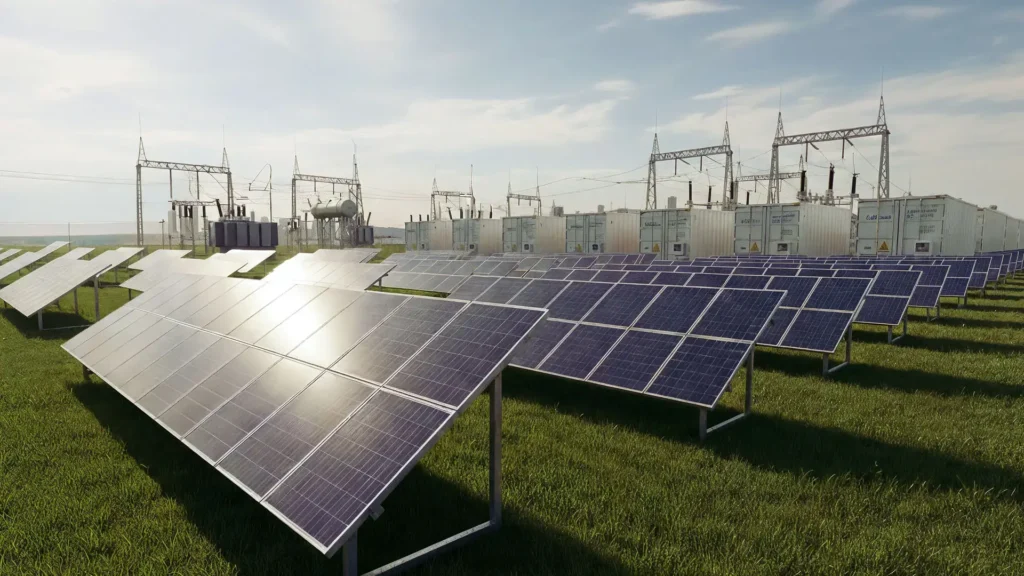
Solar and wind proved renewable energy works. Hybrid systems make it work better.
The global energy transition has already passed its first real test.
Solar and wind are no longer theoretical technologies or niche alternatives. They are proven, cost-competitive, and deployable at scale. The question now is not whether renewables work, but how energy infrastructure evolves to meet the realities of modern demand.
The next phase is not about replacement. It is about optimisation.
Why Traditional Energy Worked for So Long
Conventional energy systems succeeded for one simple reason: they were dispatchable and predictable.
Coal, gas, and nuclear power could be ramped up or down to meet demand in real time. Grid operators valued certainty. Energy availability followed consumption patterns, not weather conditions.
That predictability defined energy infrastructure for decades and shaped how grids, pricing models, and long-term planning were built.
First-Generation Renewables Proved the Model
The first wave of renewables focused on one objective: proving viability.
Solar and wind demonstrated that clean energy could be:
- Delivered at utility scale
- Deployed rapidly
- Cost-competitive with fossil fuels
That phase worked. The economics are now well understood, and renewable generation is a permanent part of global energy supply.
But generation alone does not solve the full infrastructure challenge.
The Next Evolution: Matching Supply With Demand
Modern energy systems are no longer judged solely on how cheaply power can be generated. They are judged on how reliably that power can be delivered when it is needed.
This is where infrastructure thinking has evolved.
Instead of viewing renewables as standalone assets, the focus has shifted to systems that align generation with real-world consumption patterns. The goal is smoother delivery, greater flexibility, and stronger grid resilience.
The Role of Battery Storage
Battery storage is not a replacement for solar or wind. It is an enhancement.
By storing excess generation and releasing it outside peak production windows, batteries extend the usefulness of renewable assets. Energy generated during high-output periods becomes available during periods of higher demand.
The result is not intermittency, but continuity.
This integration improves grid stability, reduces congestion, and increases the overall value of renewable infrastructure.
Hybrid Systems: Infrastructure, Not Experimentation
Hybrid energy systems combine solar, wind, and storage into a single, optimised platform. This is not a speculative concept. It is a logical progression in how infrastructure matures.
These systems:
- Improve predictability without sacrificing sustainability
- Enhance grid compatibility
- Align energy output with demand cycles
Importantly, they build on what already works rather than attempting to reinvent it.
A More Mature Energy Landscape
The evolution of energy infrastructure mirrors what happens in every capital-intensive industry.
Early phases prove feasibility. Later phases focus on efficiency, integration, and optimisation.
Hybrid renewable systems represent that next phase. Not louder. Not riskier. Simply better engineered.
For investors and advisors assessing long-term infrastructure opportunities, this shift reflects maturity, not experimentation. It is the natural progression of a sector that has already proven its place in the global energy mix.
Professional Investor Notice
This article is provided for information purposes only and does not constitute an offer or solicitation to invest. Investment opportunities are available only to eligible High-Net-Worth and Sophisticated Investors. Capital is at risk.