
|
In brief
|
From installing capacity to integrating it
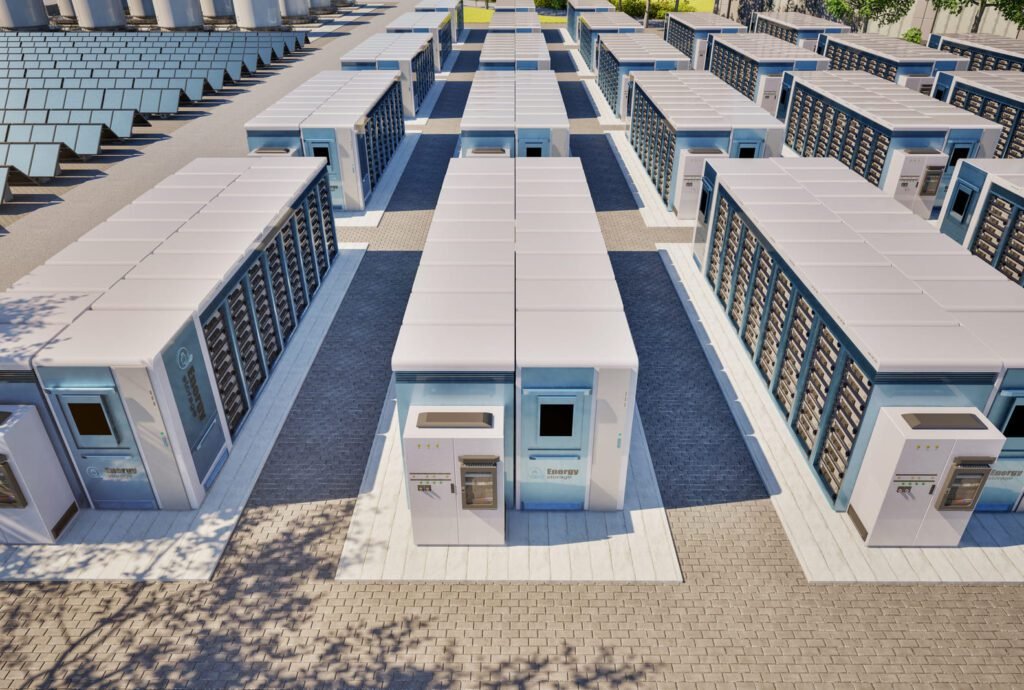
Portugal is changing how its electricity system works. In 2026 the government introduced its first comprehensive National Energy Storage Strategy, with targets of 3 GW of battery storage by 2030 and 4.5 GW by 2040, alongside expanded pumped hydro. The targets draw on technical studies by INESC TEC and Instituto Superior Técnico.
The government is explicit about the shift. The next phase is not only about installing renewable capacity but about integrating it into the grid through storage and flexibility, so that less output is curtailed and less gas is burned to balance the system.
The pressure behind that shift is real. Renewables supplied 80.7% of Portugal’s electricity in early 2026, one of the highest shares in the European Union. More than 15 GW of solar is under development, with investment expected to exceed €10 billion by 2030. Without storage, a growing share of that output would arrive when the grid cannot use it.
The auctions: 1,050 MW of grid capacity
Two auctions scheduled for 14 September 2026 will allocate 1,050 MW of grid capacity. The first will cover 750 MW of stand alone battery storage. The second will allocate 300 MW of surplus grid capacity to renewable projects with colocated storage.
More important than the volume is the mechanism. The auctions are permanent and recurring, which gives developers a predictable route to injection points and reduces development risk. The design also includes several new features:
- Municipalities receive 30% of auction revenue, rising to 70% for colocated projects.
- Developers allocate 2.5% of net income to local community benefits.
- Agrivoltaic projects receive a 20% bonus in the auction process.
- Minimum bid sizes and duration requirements apply.
- Capacity is concentrated at strategic 400 kV nodes, including Estremoz, Sines/Santo André, Abrantes, Pegões/Divor and Tavira.
Public funding behind the targets
The Recovery and Resilience Plan (PRR) supports the same direction. It provides €99.75 million for at least 500 MW of storage and a further €60.25 million to strengthen the resilience of the Public Electricity Service Network (RESP) through grid connected batteries. The European Council’s approval of Portugal’s revised PRR in late 2025 secured €415 million for batteries, hydrogen and grid reinforcement, with execution deadlines extended to 2028 and 2029.
What this means for Santa Marta and Baloiço
Grid access is the item that most often decides whether a project reaches Ready to Build. A permanent, transparent auction makes that access more predictable, which reduces regulatory uncertainty and improves bankability for the institutional buyers who acquire projects at that stage. We explain why that milestone matters in why the value in solar development in Portugal sits before the panels go in.
The two Solar45 projects map onto the two auction windows. Santa Marta combines 200MW of solar with potential for 150MW / 600MWh of storage, the hybrid profile the 300 MW colocated window is designed for. Project Baloiço is a 30MW / 120MWh stand alone battery, the profile of the 750 MW window. Both can compete for capacity at strategic 400 kV nodes, and agrivoltaic bonuses may apply where the site design allows.
The revenue sharing rules matter too. Mandatory municipal revenue and community contributions strengthen local acceptance, which reduces permitting friction. That is especially relevant for Santa Marta in southern Portugal, where municipalities stand to gain the higher share available to colocated projects. Santa Marta’s longer development history is covered in what patience looks like in a solar development.
The risks that remain
Competition in the auctions will be intense, and winning capacity is not the same as reaching Ready to Build. Curtailment remains a factor: under the auction design, colocated projects may face up to 1,100 hours of curtailment a year. Planning, construction and timing risk all still apply, and auction outcomes cannot be assumed.
The bottom line
Portugal’s 2026 reforms create one of the clearer frameworks in Europe for pairing renewables with storage. National targets, a permanent auction, revenue sharing and priority for grid integration all point in the same direction as the Santa Marta and Baloiço designs. That alignment improves the case for both projects; it does not remove the risks of development.
For certified high net worth individuals, sophisticated investors and investment professionals only. Not for retail investors. Solar45 is not authorised or regulated by the FCA, and the investments referred to are unregulated. This is not financial advice or an offer. Capital is at risk, investments may be illiquid, and past performance is not a reliable indicator of future results. Seek independent advice before investing. See our Legal Notice.
